At the moment, there are no entries available for display




The Bank’s community engagement framework is built upon three interconnected pillars, as illustrated in the Figure 47 below, which collectively advance social progress, environmental stewardship and inclusive economic opportunity.

Environmental engagement
Why environmental engagement matters
Environmental engagement is a core expression of the Bank’s Community Engagement pillar, reflecting the material link between ecological stability and long-term community resilience, water security, livelihoods and economic productivity. Biodiversity loss, coastal and freshwater pollution, and catchment degradation are not only environmental concerns; they translate into heightened climate vulnerability and pressure on public infrastructure, compounding risks for households, SMEs and the real economy. Within this context, the Bank prioritises interventions that combine ecological credibility with social durability, location-specific programmes grounded in scientific/technical expertise and structured to sustain outcomes beyond a single project cycle through governance, monitoring and community participation.
Our approach
Commercial Bank’s approach recognises that effective environmental engagement requires more than symbolic action or isolated campaigns. It is delivered through a disciplined model that combines scientifically grounded restoration methods, governance and monitoring mechanisms that protect long-term outcomes, and community participation models that reduce the likelihood of reversal once a project cycle comes to a close. In practice, the approach is delivered through three mutually reinforcing priorities:
- Restoring high-value ecosystems through science-led partnerships with clear restoration methodology (e.g., intensive forest restoration and nature-based marine solutions).
- Reducing persistent environmental stressors, especially coastal/marine litter, through continuous, community-anchored systems rather than periodic clean-ups.
- Strengthening watershed and catchment resilience at scale through reforestation aligned with national water-security priorities, supported by structured monitoring and broad stakeholder participation.
Key developments during 2025
The 2025 programme builds on earlier flagship initiatives such as “Trees for Tomorrow” (100,000 trees planted during 2023–2024) and prior ecosystem and coastal conservation work, while shifting further toward durable models with clearer governance, monitoring and maintenance mechanisms.
Restoring ecosystems through science-led partnerships
Life to Our Coral Reefs: Nature-based solutions linked to community resilience (Kayankerni Seascape)
The Bank continued the Life to Our Coral Reefs initiative in 2025 at the Kayankerni Seascape, positioning it as a nature-based solution that integrates ecological restoration with socio-economic resilience.
The approach combines long-term ecological research with the development of sustainable livelihood pathways aimed at reducing anthropogenic pressure on reef systems. These include eco-tourism initiatives, such as mangrove kayak trails, designed to support local incomes while lowering dependence on activities that strain marine ecosystems.
During 2025, progress also focused on strengthening governance and enabling conditions. This included the establishment of Kayankerni Marine Sanctuary management guidelines and the mapping of biodiversity hotspots to guide future eco-tourism interventions and enhance protection of sensitive habitats.
Collectively, these efforts reflect a shift from isolated project activities to a more systemic integrity approach, reinforcing the durability and long-term resilience of marine conservation outcomes.
Tackling coastal pollution through continuous, community-anchored models
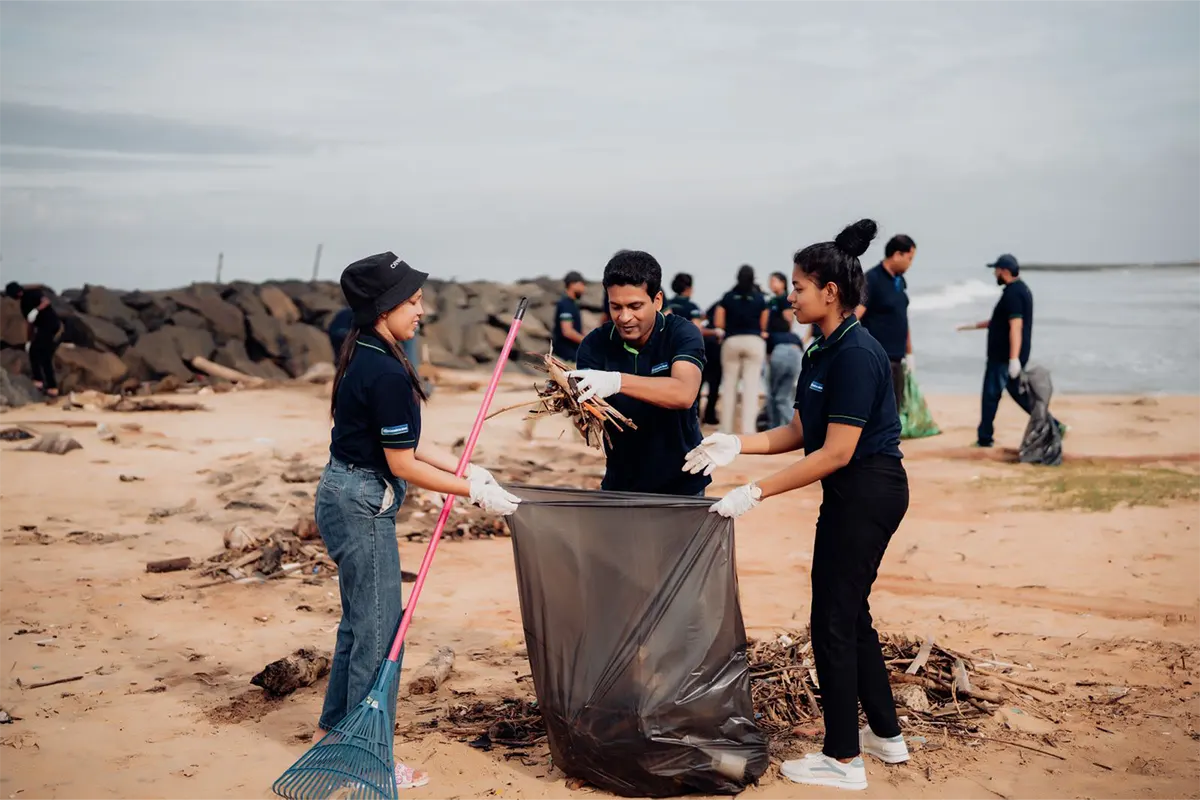
Life to Our Beaches: Beach Caretaker Programme (Calido Beach, Kalutara)
A key initiative undertaken in 2025 was the operationalisation of the Beach Caretaker Programme at Calido Beach, Kalutara, in partnership with the Marine Environment Protection Authority (MEPA).
The programme was designed to address a persistent coastal management challenge - the rapid reaccumulation of waste following one-off clean-up campaigns. Moving beyond periodic interventions, it establishes a system of continuous daily waste management, ensuring sustained shoreline maintenance and improved environmental durability.
Implementation is carried out by local community members from low-income households, directly linking ecological protection with livelihood support and embedding stewardship into routine economic activity.
During the reporting period, the initiative removed over 1,500 kg of marine litter, predominantly plastics and other non-biodegradable materials. This has contributed to reducing pollutant loads and strengthening environmental outcomes in a high-visibility coastal location.
Community-based pollution mitigation and freshwater protection
Complementing longer-term, system-oriented interventions, the Bank supported a range of community-based environmental initiatives in 2025 aimed at addressing immediate pollution pressures and strengthening public awareness of ecosystem protection.
Beach clean-up programmes were conducted across multiple regions to promote responsible waste management and disposal practices. In parallel, riverbank clean-up initiatives led by Future Force members targeted freshwater pollution, contributing to improved water quality, protection of inland biodiversity, and reduced downstream contamination affecting communities and agriculture.
Although episodic in nature, these actions play an important role in mobilising community participation and reinforcing environmental awareness, thereby supporting the durability of broader sustainability efforts.
In total, Future Force members delivered more than 30 environment-focused volunteer initiatives in 2025, combining clean-up activities with local awareness programmes on responsible waste disposal, recycling, and pollution reduction to strengthen long-term environmental stewardship.
Catchment restoration and water-security-aligned reforestation at scale
Trees for Tomorrow: Phase II partnership with the National Water Supply and Drainage Board (NWSDB)
Phase II of Trees for Tomorrow was launched in 2025, following the successful completion of the initial 100,000-tree planting phase (2023–2024). Implemented in partnership with NWSDB, this phase focuses on restoring environmentally sensitive and water-catchment areas to enhance water security and climate resilience.
During the year, 12,500 trees were planted across 10 ecologically vulnerable priority locations. The programme aims to deliver carbon offsetting, biodiversity enhancement, soil erosion reduction, and hydrological benefits such as improved dry-weather flow and sponge-layer development.
It promotes broad participation from employees, customers, communities, schools, and civil society partners. To ensure accountability, each tree is GPS-mapped and recorded with details including species, planting date, and height, enabling continuous monitoring and long-term stewardship.
Targets and metrics
Given the nature of this sub-pillar, the most decision-useful measures are those that evidence durability, scale, and integrity of monitoring. Based on confirmed 2025 information, consider tracking:
- Life to Our Coral Reefs: completion/updates on sanctuary management guidelines and biodiversity hotspot mapping.
- Beach Caretaker Programme: kg of litter removed (>1,500kg in 2025)
- Trees for Tomorrow (Phase II): trees planted (12,500); # locations (10)

Signing an agreement to collaborate on a tree-planting initiative,
reinforcing a shared
commitment to environmental conservation and sustainable development.

Outlook for 2026
In 2026, the Bank’s environmental engagement agenda will focus on scaling interventions that deliver durable ecological outcomes while strengthening monitoring, maintenance and outcome credibility. Key priorities include:
- Scaling ecosystem restoration with scientific integrity: The Bank will continue to expand science-led restoration in high-value ecosystems (forests and marine environments) through specialist partnerships, applying clear restoration methodologies and governance mechanisms that protect outcomes beyond the initial project cycle.
- Deepening durability of pollution reduction models: Building on the Beach Caretaker Programme, focus will remain on moving from episodic clean-ups to continuous, community-anchored waste management approaches that reduce re-accumulation of litter and strengthen local stewardship over time.
- Strengthening monitoring, traceability and outcome reporting: The Bank will further strengthen tracking systems (e.g., GPS-based tree monitoring databases and project-level outcome documentation) to demonstrate not only activities delivered, but the durability and effectiveness of outcomes over time.
Social engagement
Why social engagement matters
Sri Lanka’s long-term economic resilience depends on the quality of human capital, the reliability of essential public services and the ability of communities to recover from shocks. For Commercial Bank, social engagement is therefore treated as a core expression of the its Community Engagement pillar: education gaps constrain productivity and opportunity, while constraints in the public health system increase avoidable vulnerability for households and workers, ultimately affecting inclusive growth and the depth of the financial system.
Our approach
The Bank’s approach to social engagement is structured around the view that meaningful social outcomes require sustained programmes that build capabilities over time rather than one-off donations, partnerships that strengthen delivery quality and accountability, and clear outcome orientation – tracking what was enabled in terms of infrastructure built, facilities equipped and beneficiaries reached, rather than describing activity alone.
In practice, the Bank’s approach in 2025 was delivered through the following interdependent priorities:
- Building education capability at scale, with an emphasis on digital access and modernisation of STEM and mathematics learning environments in under-resourced schools.
- Strengthening public healthcare capacity through targeted investments in high-value diagnostic and treatment infrastructure at government hospitals.
- Supporting community resilience during shocks, including education continuity measures and restoration support in response to disaster impacts.
To institutionalise this structured and outcome-oriented approach, all CSR initiatives are implemented through the CSR Trust Fund, ensuring consistency, governance oversight and long-term continuity of programmes.
CSR Trust Fund
The Bank’s CSR initiatives are governed by the Commercial Bank Corporate Social Responsibility Trust (CSR Trust), which oversees the Bank’s sustainability and community engagement agenda under a structured and accountable framework. Funding is anchored to 1% of the Bank’s annual post-tax profit, ensuring a transparent, sustainable source of support for multi-year programmes while retaining flexibility to respond to national emergencies.
Education remains the primary focus, receiving approximately 70% of CSR funding, with emphasis on STEM, digital access and skills development. The remaining 30% supports healthcare, environmental sustainability and other social priorities (Refer Figure 48).
Across education, healthcare and disaster response, the Trust emphasises scale, continuity and measurable outcomes. Interventions are designed to strengthen institutions and service delivery rather than support short-term initiatives. A structured evaluation process ensures readiness and usability of funded projects, while a “Public–Private–People” partnership model enables collaboration with government bodies, educational authorities and specialist organisations to enhance long-term impact.
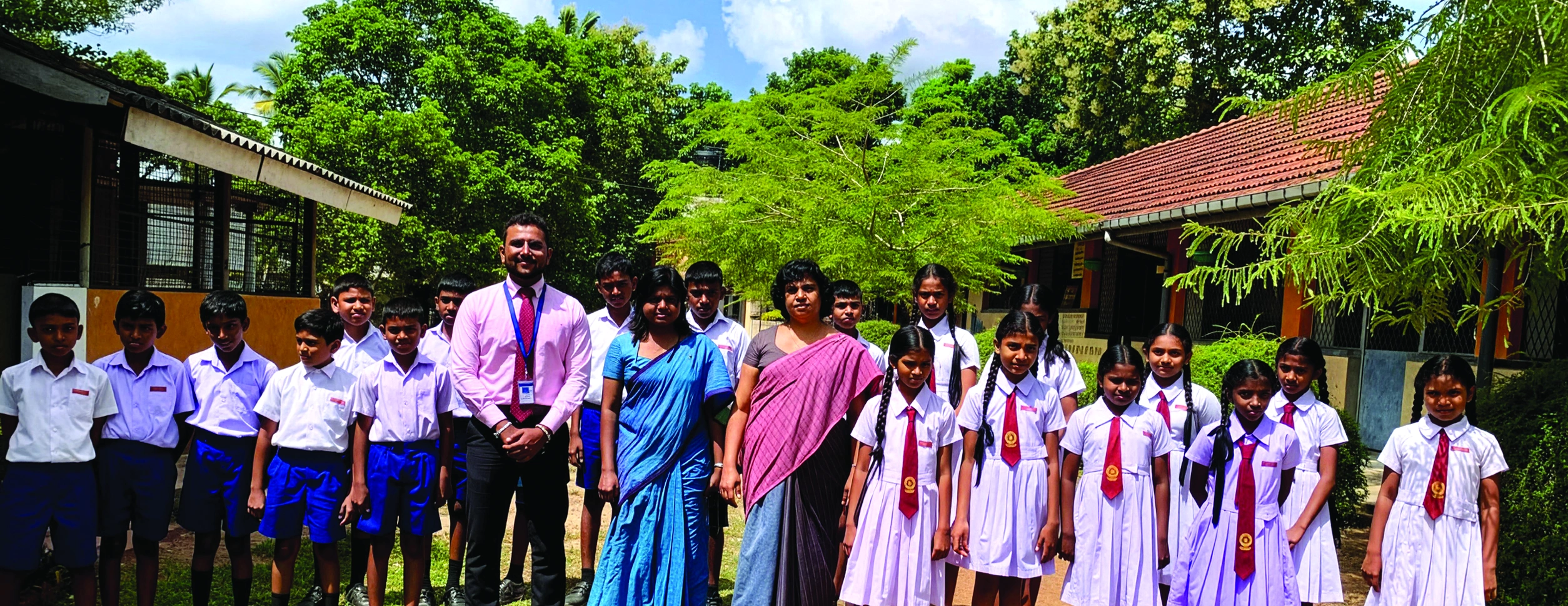
Staff members engaging with schoolchildren during a community outreach initiative,
reflecting the Bank’s commitment to education and social development.

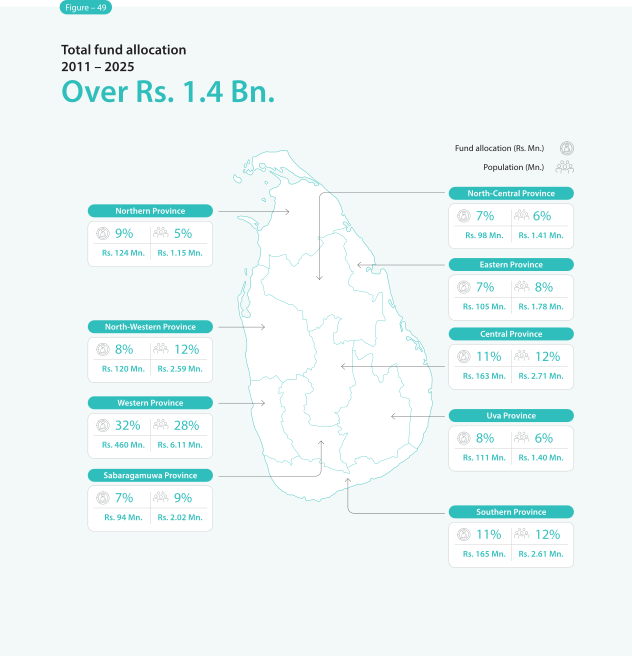
Snapshot of CSR and sustainability initiatives
The Figure 50 below summarises the Bank’s CSR interventions, with education as the core focus, complemented by targeted healthcare support and disaster response.
Snapshot of CSR activities Figure – 50

IT Labs (2025)
67 | 810 PCs
429 total labs
and 3,666 PCs.
Beneficiaries/Impact (Cumulative) 450,000+ students across 379 schools
and 51 institutions
and 3,666 PCs.
Beneficiaries/Impact (Cumulative) 450,000+ students across 379 schools
and 51 institutions
Vocational education (2025)
02 sessions
82 total sessions.
Beneficiaries/Impact (Cumulative) 11,000+ individuals
Beneficiaries/Impact (Cumulative) 11,000+ individuals
STEM classrooms (2025)
19
Total contribution
129 Labs and 100 seminars Beneficiaries/Impact (Cumulative) 220,000+ students
129 Labs and 100 seminars Beneficiaries/Impact (Cumulative) 220,000+ students
SMART classrooms (2025)
Total contribution
18 Classrooms, 03 TVs, and
15 Boards.
Beneficiaries/Impact (Cumulative) Strategic focus on digital literacy
18 Classrooms, 03 TVs, and
15 Boards.
Beneficiaries/Impact (Cumulative) Strategic focus on digital literacy
Math labs & seminars (2025)
6 Labs | 10 seminars
Total contribution
129 Labs and 100 seminars
Beneficiaries/Impact (Cumulative) 100,000+ students across 130 schools
and 2 institutions
129 Labs and 100 seminars
Beneficiaries/Impact (Cumulative) 100,000+ students across 130 schools
and 2 institutions
Mobile repair courses (2025)
Total contribution
09 courses
Beneficiaries/Impact (Cumulative) 57 students
09 courses
Beneficiaries/Impact (Cumulative) 57 students

Water projects (2025)
14
Total contribution
55 projects.
Beneficiaries/Impact (Cumulative) 8 hospitals, 13 communities, and 33
schools and 01 University
55 projects.
Beneficiaries/Impact (Cumulative) 8 hospitals, 13 communities, and 33
schools and 01 University
Rain water harvesting (2025)
Total contribution
160 tanks (5,000-liter storage) Beneficiaries/Impact (Cumulative) 970+ people in Ginnoruwa
160 tanks (5,000-liter storage) Beneficiaries/Impact (Cumulative) 970+ people in Ginnoruwa
Disaster relief (2025)
25 projects
(Rs. 110 Mn. to Government’s
Rebuilding Sri Lanka Fund, Rs. 8.2 Mn.
for distribution of dry rations, and
Rs. 6 Mn. to 23 branches)
Total contribution
41 projects
Beneficiaries/Impact (Cumulative) Initiatives under “Rebuild Together”
programme for post-cyclone and
flood relief efforts
Rebuilding Sri Lanka Fund, Rs. 8.2 Mn.
for distribution of dry rations, and
Rs. 6 Mn. to 23 branches)
Total contribution
41 projects
Beneficiaries/Impact (Cumulative) Initiatives under “Rebuild Together”
programme for post-cyclone and
flood relief efforts
Healthcare projects (2025)
Invested Rs. 29 Mn.
Total contribution
109 total Hospital projects.
Beneficiaries/Impact (Cumulative) Improvement of Critical healthcare
equipment in hospitals
109 total Hospital projects.
Beneficiaries/Impact (Cumulative) Improvement of Critical healthcare
equipment in hospitals

Key developments during 2025
The Bank’s social investment focuses on strengthening education, healthcare, and community resilience to build long-term social value. Guided by scale, partnerships, and outcome clarity, initiatives are designed to enhance learning environments, improve public health capacity, and provide timely support during national emergencies.
Education across the learning continuum
Building on its strategic prioritisation of education, the Bank continued to strengthen learning environments across multiple stages of the education lifecycle, from early childhood foundations to advanced STEM capability development, as detailed below.
- Bridging the digital divide through IT laboratory infrastructure, with hardware and enabling renovations targeted to under-resourced schools.
- Modernising STEM and mathematics learning environments, combining technology-enabled classrooms with dedicated mathematics labs and associated capacity support.
- Improving early childhood learning environments through partnerships, including the Bank’s collaboration with UNICEF and government partners to improve preschool education outcomes.
Education: Digital access and IT laboratory infrastructure
The Bank’s flagship National Digital Literacy Drive (IT Labs) expanded to 429 fully equipped laboratories in underprivileged schools nationwide, including 67 established during the year, benefiting approximately 450,000 students. Each lab was delivered as a complete learning environment with computers, furniture, and essential renovations, ensuring practical and sustained usability rather than standalone equipment donations.
Education: STEM classrooms and Math Labs
The Bank continued its commitment to STEM education modernisation through the expansion of STEM Smart Classrooms and Math Labs, strengthening applied learning environments nationwide. During the year, 19 STEM Classrooms and 6 Math Labs were added, bringing the total to 195 STEM Classrooms and 129 Math Labs, collectively supporting approximately 320,000 students. Each facility was delivered as a structured, quality-focused learning space integrating digital interactive panels, modern layouts, specialised mathematics tools, and teacher-support components to ensure meaningful enhancement of science and mathematics education.
Education: Early childhood learning environment
As outlined in Figure 50, the Bank expanded its education pillar in 2025 to include Early Childhood Development (ECD), recognising that quality preschool environments are critical to shaping long-term learning outcomes.
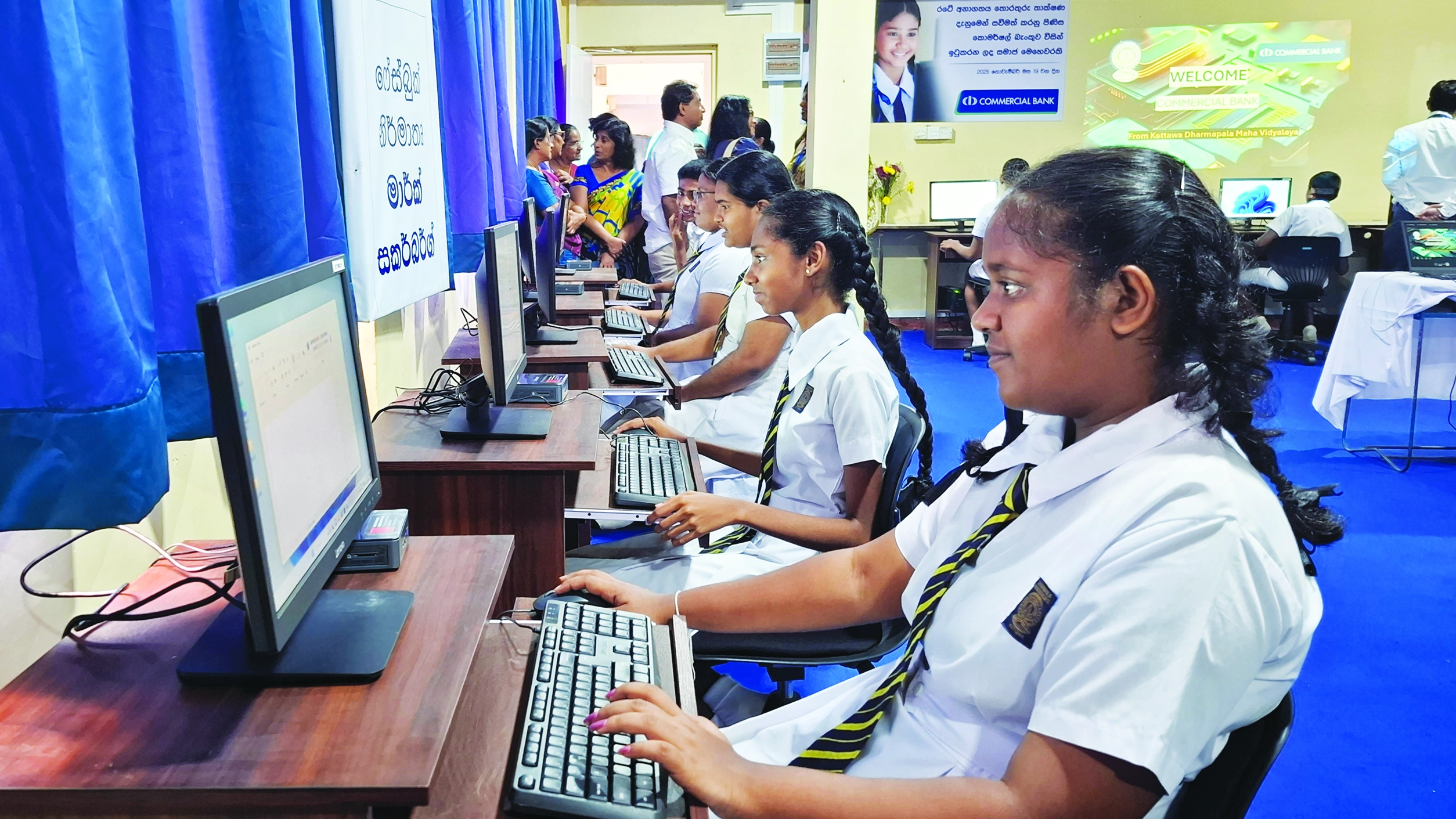
Students using newly provided computer facilities at a school IT lab
established through the Bank’s initiative to support digital learning and education.
Healthcare: Strengthening public health system capacity
In addition to education, the Bank directed targeted social investment in 2025 towards strengthening public healthcare infrastructure, recognising that access to quality healthcare is fundamental to household resilience and sustained economic participation.
During the year, approximately Rs. 29 Mn. was invested in the donation of high-value diagnostic and treatment equipment to several government hospitals. These investments enhanced capacity in emergency treatment, critical care and kidney disease management, directly supporting frontline public health services.
Disaster response: Cyclone Ditwah relief
Social engagement in 2025 included a structured disaster response component, reflecting the Bank’s role in supporting community recovery during national emergencies. Following Cyclone Ditwah, the Bank mobilised assistance through both national coordination and branch-led local action.
In partnership with the Sri Lanka Air Force and the Disaster Management Centre (DMC), essential relief supplies were delivered to flood-affected and inaccessible areas, while branches independently identified and supported displaced families within their communities.
A total of Rs. 125 Mn. was deployed for Ditwah relief efforts, Rs. 119 Mn. through national partners and Rs. 6 Mn. via branch-level initiatives providing timely humanitarian assistance during a period of widespread disruption.
Disaster response: School revitalisation and education continuity (employee volunteerism)
In response to the Ditwah Cyclone, which caused significant damage to school infrastructure in affected regions, the Bank mobilised staff volunteers to support school revitalisation efforts. Bank staff supported cleaning, restoration, and revitalisation of school premises in affected areas, including debris removal, classroom cleaning, basic repairs, and environmental clean-ups, enabling schools to resume academic activities in safe conditions. Through this initiative, more than 10 volunteer events were conducted and approximately 2,000 beneficiaries were supported across cyclone-affected locations. The initiative combined immediate recovery support with longer-term social value by restoring access to education for affected communities.
Targets and metrics
Because social engagement is delivered through multi-year programmes, targets and metrics are most decision-useful when they show funding discipline, allocation priorities and measurable outcomes (infrastructure enabled, services strengthened and beneficiaries reached). The following indicators provide a consistent basis for tracking progress year-on-year across education, healthcare and shock response initiatives.
- CSR Trust cumulative investment since inception (Rs.) and annual deployment (Rs.) – see Figure 49
- Allocation mix – see Figure 48
- IT labs established (cumulative) and student beneficiaries – see Figure 50
- STEM classrooms and Math Labs (cumulative) and student beneficiaries – see Figure 50
- Healthcare investments (Rs. Mn) and facility/equipment focus areas – see Figure 50

Outlook for 2026
In 2026, the Bank’s social engagement agenda will focus on sustaining scale while strengthening implementation quality and outcome clarity across priority themes. Key priorities include:
- Scaling education with stronger delivery quality: Continue prioritising digital access (IT Labs) and STEM/Mathematics facilities, while ensuring usability through readiness assessments, enabling renovations, and active coordination with education partners. Gradually expand beyond infrastructure into skills development, including coding and robotics, to strengthen learning outcomes.
- Targeted, high-impact healthcare support: Focus on critical diagnostic and treatment infrastructure that strengthens public health system capacity and delivers broad, systemic benefits.
- Sustained disaster response readiness: Maintain the ability to mobilise rapidly through national partnerships and branch-level action, with particular emphasis on restoring school operations and supporting community recovery.
Across all themes, the Bank will continue to anchor social engagement in disciplined governance through the CSR Trust and structured delivery partnerships, maintaining a clear line of sight from funding to measurable outcomes and preserving alignment with national development priorities.
Social enterprise
Why social enterprise matters
Social enterprise engagement represents a distinct dimension of Commercial Bank’s Community Engagement pillar, focusing on enterprise-led pathways to social impact that go beyond charitable support. The underlying premise is that long-term social outcomes are more durable when communities are enabled to generate income and build productive capability, including through improved participation in local value chains and value addition at source.
Accordingly, the Social Enterprise agenda is designed to:
- Strengthen livelihood resilience through productivity and value addition by addressing practical bottlenecks (equipment, processing constraints, quality consistency) that limit income growth in community-based enterprises.
- Enable economic participation without creating dependency by providing targeted, asset-based support where community organisations retain ownership, governance and operating responsibility.
- Maintain disciplined stewardship and accountability by keeping interventions selective, outcome-oriented and governed within the CSR Trust framework, with clear beneficiary logic and appropriate controls over use of funds and reputational risk.
While Social Enterprise is reported under Community Engagement (impacts), it supports coherent, decision-useful sustainability reporting by evidencing how the Bank responds to financially relevant inclusion and resilience pathways (e.g., income stability and local economic participation) that can influence longer-term economic conditions and stakeholder outcomes referenced in the Bank’s broader sustainability narrative.
Our approach
The Bank’s social enterprise approach is grounded in the view that effective social investment should strengthen productive capacity rather than dependency. Social enterprise initiatives are therefore structured around targeted support that improves operational efficiency, unlocks market access or enables value addition, while allowing community organisations to retain ownership and agency.
This approach is delivered through three mutually reinforcing priorities:
- Removing specific productivity constraints (e.g., low processing capacity, inefficiency, lack of appropriate equipment) that limit income generation in community-based enterprises.
- Enabling value addition at source so producer groups retain a greater share of economic value within communities rather than selling only raw output.
- Working through locally embedded partners to ensure interventions are context-appropriate, locally governed and aligned with existing livelihood structures, while maintaining clarity that the Bank does not operate the enterprise.
Key developments during 2025
During 2025, the Bank strengthened its Social Enterprise agenda through targeted, productivity-enhancing interventions designed to improve income stability, value addition, and environmental sustainability in rural communities.
The Figure 51 below illustrates how these interventions translated into practical outcomes across bee-keeping and renewable energy adoption, linking livelihood enhancement with measurable environmental impact and SDG alignment.
Strengthening community enterprises through targeted enablement Figure – 51
Beekeeping & pollinator conservation initiatives
Kurunegala District- 25 new beekeeping families
- Starter kits & training
- Pollinator conservation
- 30 experienced beekeepers
- Advanced equipment & training
- Sustainable honey production



Solar power for rural dairy production
- Mullaitivu Livestock Breeders Co-op Society
- Solar Energy System installed
- Lower costs & increased profits


Beekeeping livelihood & pollinator conservation initiatives
Two structured pilot initiatives were implemented to promote nature-based livelihoods while supporting biodiversity conservation.
Kurunegala District (Digital Banking Division Initiative)
A pilot bee-keeping and pollinator conservation programme was launched for 25 rural farmer families who were new to beekeeping. Implemented in partnership with Wayamba University of Sri Lanka and relevant technical stakeholders, the initiative combined livelihood development with environmental education.
Each beneficiary household received a starter beekeeping kit including a bee box with a live colony (Apis cerana), a solitary bee hotel, protective gear, and bee-friendly plants. A one-day training programme provided practical guidance on hive management, pollinator importance, and biodiversity conservation. Project monitoring and knowledge capture are overseen by Wayamba University to support evidence-based evaluation and future scalability.
Badulla District (Operations department initiative)
A second pilot initiative supported 30 registered rural beekeepers with prior experience, focusing on productivity enhancement and long-term income improvement. In partnership with the Bidunuwewa Bee Development Unit of the Department of Agriculture, beneficiaries received two beekeeping boxes, protective equipment, tools, and nectar-rich plant saplings.
A two-day hands-on technical training programme strengthened capacity in hive management, colony health, and sustainable honey harvesting. Ongoing technical supervision ensures continuity, productivity improvement, and environmental benefits through enhanced pollination.
Together, these initiatives demonstrate a structured approach to livelihood enhancement – combining asset support, technical training, institutional partnerships, and monitoring discipline.
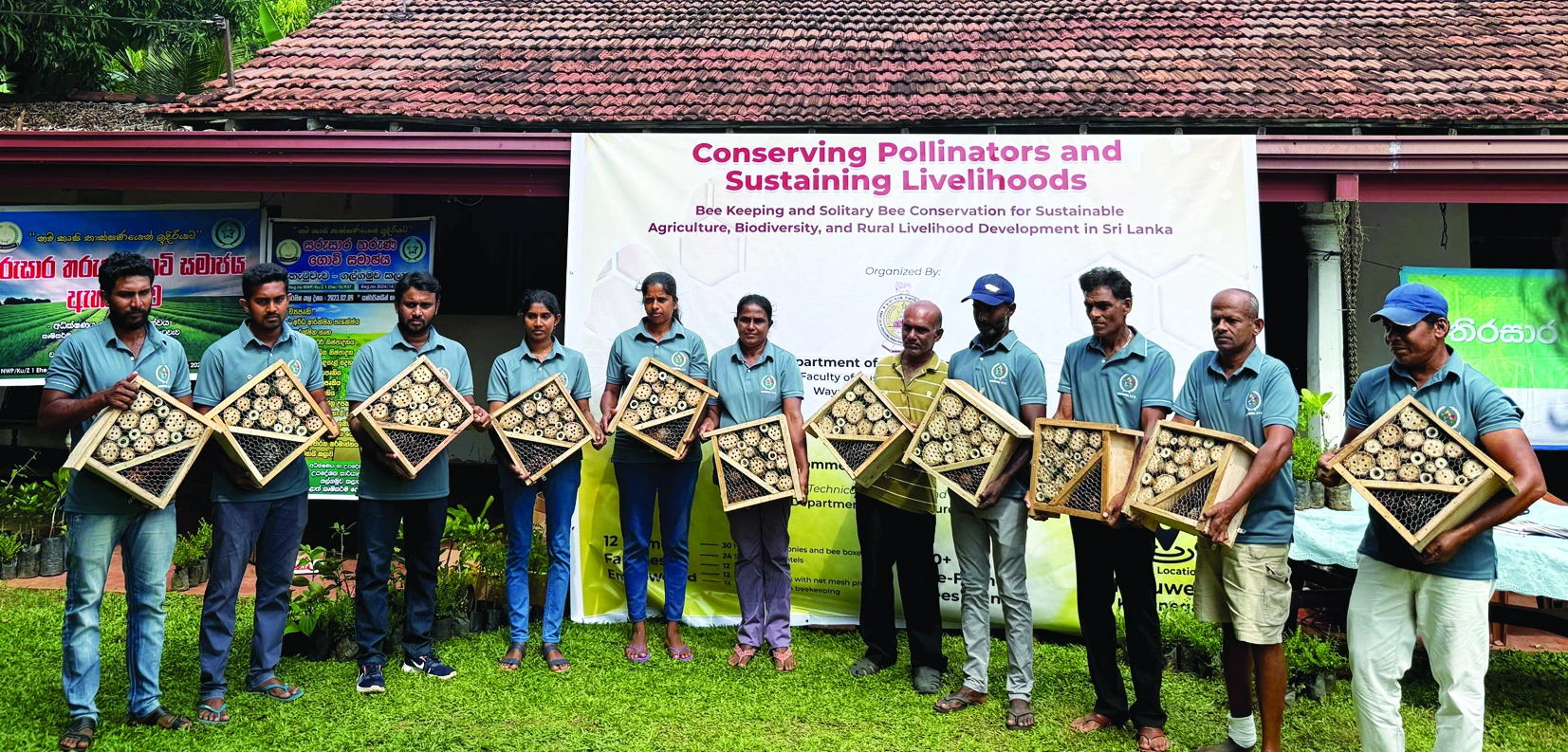
Participants displaying bee habitat units distributed under a beekeeping initiative
that promotes
pollinator conservation, sustainable agriculture, and rural livelihoods.
Agri Modernisation Village Development Programme – Empowering Rural Enterprise
Aligned with the Bank’s commitment to enterprise-led social impact, the Agri Modernisation Village Development Programme demonstrates how sustainable livelihoods can be strengthened through productive capability rather than short-term assistance. The recent Paddy Harvesting Ceremony in Vavunathivu, Batticaloa, marked another milestone in this village-by-village initiative, which supports farmers to integrate modern agricultural technologies with traditional knowledge to enhance productivity, sustainability and income resilience.
Guided by academic and agricultural experts, farmers are equipped with advanced techniques including sustainable irrigation systems, mechanised transplanting, climate-resilient crop varieties and improved resource management practices. The programme also strengthens SME participation within the agricultural value chain, enabling value addition at source and deeper integration into local markets. By improving productivity and promoting environmentally responsible practices, the initiative enhances rural incomes, supports food security and positions agriculture as a viable and rewarding profession for future generations.
The Vavunathivu event, titled ‘Potkathir,’ combined cultural tradition with technological progress, featuring ceremonial harvesting, demonstrations of modern machinery introduced through the programme, and displays of agricultural equipment. Reinforcing its long-term commitment to knowledge partnerships, the Bank also supported the Faculty of Agriculture at the Eastern University through the donation of a solar-powered water pump system with micro-irrigation facilities in partnership with Hayleys Solar, and an in-kind contribution to restore the faculty’s greenhouse fertigation system.


ComBank celebrates harvest success in Vavunathivu with the Agri Modernisation Village Programme.
Renewable energy support for dairy value addition
The Commercial Bank Mulliyawalai Branch continued its longstanding engagement with the Mullaitivu Livestock Breeders Co-operative Society, a relationship sustained for over 10 years.
The Society plays a vital role in the local economy by collecting milk from member farmers and producing natural dairy products including ghee, yoghurt, milk juice, curd, and milk toffee using traditional methods. To address rising electricity costs and improve operational efficiency, the Bank partnered with Hayleys Solar to facilitate the installation of a solar power system.
The project was structured as a shared investment: the Bank contributed a portion of the capital cost, while the Society funded the balance, ensuring ownership and accountability remained with the community organisation. By transitioning to solar energy, the Society is expected to reduce production costs, improve operational stability, and enhance profitability strengthening income flows to member farmers.
Enterprise enablement rather than operating control
Consistent with the Bank’s social enterprise philosophy, ownership and operational responsibility remain with the community organisation. The Bank’s role is limited to targeted capital support designed to remove a clearly identified constraint, with no ongoing operational involvement. This approach reduces dependency risk and reinforces local accountability, while ensuring that economic benefits accrue directly to participating members rather than being intermediated through external actors.
Social enterprise within the CSR Trust framework
Social enterprise activities during 2025 were implemented within the broader framework of the Commercial Bank CSR Trust, which serves as the institutional vehicle for structured social investment. By end-2025, the CSR Trust had surpassed a cumulative investment milestone of over Rs. 1 Bn. since inception, with education continuing to receive the largest share of funding (over 70%), alongside allocations to healthcare, environmental initiatives, disaster response and community-based interventions. Within this allocation model, social enterprise projects are treated as selective, outcome-oriented investments, prioritised where modest capital inputs can unlock meaningful productivity or income gains.
Targets and metrics
Given that Social Enterprise initiatives are selective and intervention-based, targets are most meaningful when they focus on measuring reach, productivity, value creation, and the long-term sustainability of the enterprise model. Rather than emphasising broad activity counts, these metrics provide deeper inside into effectiveness, impact, and scalability of initiatives.
Outlook for 2026
In 2026, the Bank’s social enterprise engagement is expected to remain selective and targeted, focusing on interventions where relatively modest capital inputs can unlock meaningful productivity gains or income improvements, while maintaining clarity over roles and strong stewardship of CSR resources.
Key priorities include:
- Scaling only where evidence supports replication: prioritising enterprise support that demonstrates clear productivity/value-addition outcomes and can be responsibly replicated across similar community contexts.
- Deepening outcome orientation: strengthening the linkage between support provided and livelihood outcomes (productivity, quality consistency, market access) so reporting demonstrates “what changed”, not only “what was done.”
- Preserving community ownership and governance: maintaining the enablement model (not operator role), with continued emphasis on accountability and locally grounded partnerships aligned to inclusion and economic participation objectives.